The First 3 Regulation Checks
Canadian fishing regulations are detailed, but these checks matter first after you choose the right licence path:
Rule 1: Don't keep too many fish. Every species has a daily catch limit and a possession limit. When in doubt, keep fewer.
Rule 2: Don't keep fish outside the size rule. Some waters use minimum sizes, maximum sizes, or slot sizes. If you're not sure, release it.
Rule 3: Check if the species is in season. Some species are closed during spawning. Catching them during a closed season can still be a problem even if you planned to release them.
Those three checks cover many ordinary trips, but local exceptions still matter. The next section explains how to read the province or territory rule table without treating a broad summary as the final answer.
Check The Rule Before You Rely On A Guess
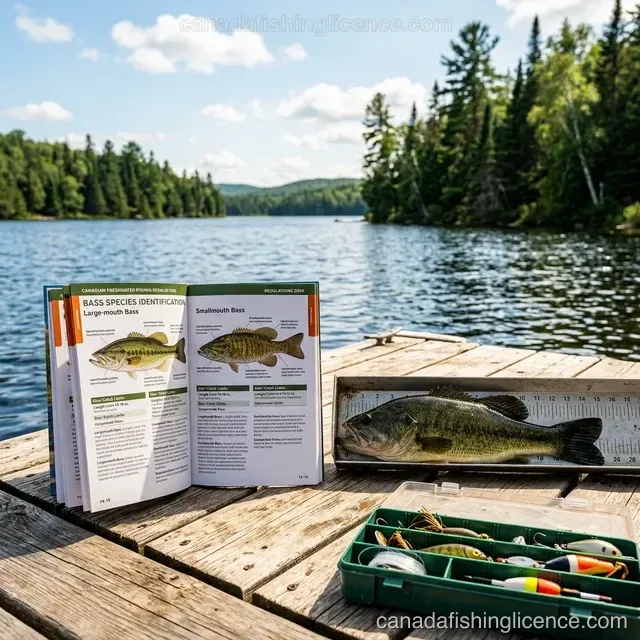
Fine amounts vary by province, offence, species, waterbody, and court outcome, so a single Canada-wide fine range is not a reliable planning rule. Conservation Officers may also deal with licence proof, possession, transport, gear, and closed-season questions, not only deliberate poaching.
The better habit is simple: check the current province or territory regulation summary, find the zone or management area, then read the row for the species and water you plan to fish. If the table names an exception for that lake, river, stocked water, sanctuary, or park boundary, the exception is the rule that matters.
If you accidentally catch the wrong species, an undersized fish, or a fish during a closed season, release it carefully and change what you are doing if needed. Do not keep fishing in a way that targets a closed species or a fish you cannot legally retain.
Catch Limits — The Most Important Numbers
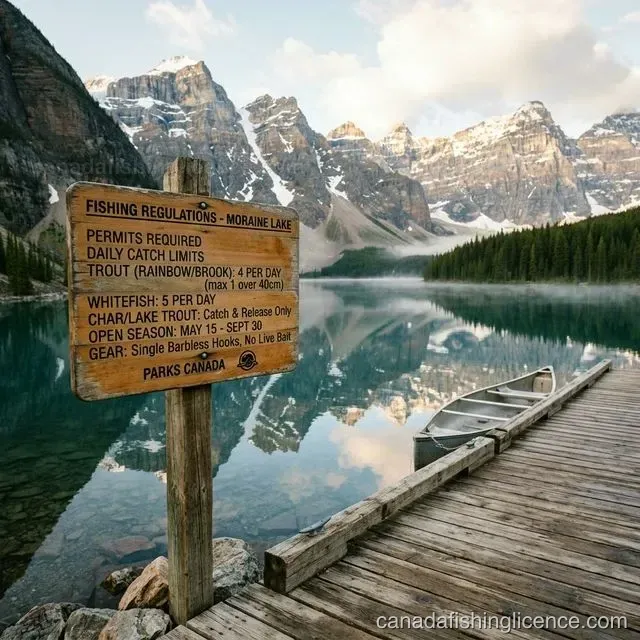
Two numbers matter: your daily catch limit (how many you can keep in one day) and your possession limit (the maximum you can have at any time — including in your cooler, freezer, or car).
For example, Ontario presents species limits by Fisheries Management Zone and then adds waterbody-specific exceptions. Open the current Ontario Fishing Regulations Summary, identify the FMZ with Fish ON-Line, and read the species row plus any named-water exception. Do not carry a limit from one zone or lake to another.
The possession limit catches people off guard: If your walleye possession limit is 2 and you already have 2 fillets in your freezer at the cabin, you cannot keep any more walleye until you eat those. It's not "2 per day on top of what you already have."
Aggregate limits: Some provinces group species together. In Ontario, some Fisheries Management Zones combine trout and salmon under an aggregate limit — for example, a Sport licence may allow up to 5 total combined in that zone, not 5 of each. Read the row for your zone because the species, number, and exceptions can change by FMZ and waterbody.
Size Limits — When to Measure, When to Release
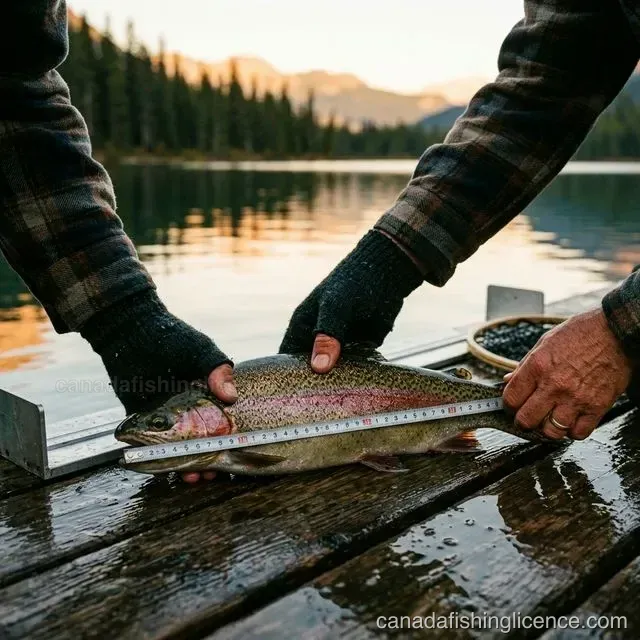
Provinces set size limits to protect fish that haven't reproduced yet (minimum size) or that are the best breeders (maximum/slot limits). Three types:
Minimum size: Release anything shorter. The exact number is water- and species-specific, so treat any example in a local table as an example rather than a Canada-wide rule. Maximum size: Release anything longer where the rule says so. Slot limit: Release fish within the stated range; the zone or waterbody table controls which sizes may be kept.
How to measure: Follow the method in the local regulation summary and measure before deciding to keep a fish. A measuring board makes the check easier, but the legal size and method vary by species and jurisdiction. When in doubt, release it and re-check the current local rule.
Seasons — Some Species Are Closed During Spawning
Most species have specific "open seasons" — the times when you can legally target them. Outside those dates, the species is "closed": do not target it. If you are legally fishing for an open species and accidentally catch a closed one, release it immediately. Seasons protect fish during spawning when they're most vulnerable.
Common patterns: Walleye typically closes in spring (April–May) for spawning, reopens late May or the third Saturday in May/June depending on the zone. Bass opens late June in most provinces. Trout varies wildly by species and water body. Pike usually has the longest open season.
Here's the part that confuses beginners: a species being "closed" does not mean you can't fish that lake. You can still fish for other open species. But you must release any closed-season fish immediately — and you should avoid deliberately targeting them (using walleye-specific lures on a lake where walleye is closed looks intentional to a CO). In some areas, all fishing closes entirely during spawning periods — called "sanctuary" areas in Ontario.
Don't forget free fishing days: Most provinces offer several days per year when no licence is required. These are great for beginners — but all other regulations (seasons, limits, sizes) still apply during free events.
Gear Rules You Need to Know
Most gear rules are straightforward:
Number of lines: Usually 1 line per person (open water) and 2 for ice fishing. Ontario allows 2 in some zones — check your specific Fisheries Management Zone. Barbless hooks: There is no single Canada-wide hook rule. They are required in many B.C. waters, Alberta trout streams, some national park waters, and province-wide in Manitoba. NWT also has territory-specific barbless-hook rules. Check the local handbook for the exact water and species before changing tackle. Even where barbless is not required, it makes catch-and-release easier on the fish.
Live bait: Alberta bans live bait fish and crayfish, and bait rules can still vary by zone and waterbody. Many specific waters in other provinces also restrict bait. Check your zone. Lead tackle: Some national parks and some provincial waters restrict lead tackle, so pack non-lead alternatives when you are unsure. Fly-fishing-only waters: Some rivers restrict you to fly rods and artificial flies — no spinning gear or bait. This is common on Atlantic salmon rivers and BC steelhead rivers.
Electronics: Fish finders, sonar, and GPS are allowed in many recreational fisheries, but a specific park, sanctuary, or waterbody can add its own gear restrictions. Check the local rule if you plan to rely on electronics.
How to Read Your Province's Regulations in 5 Minutes
Most provinces publish a free annual fishing regulations summary, often as a long PDF or online guide. You only need the parts that apply to your water, species, and date. Here's how to find what you need:
Step 1: Find the zone map. It's called FMZ (Fisheries Management Zone) in Ontario, Fish Management Zone in Alberta (zones like ES1, PP1, NB1), and similar names elsewhere. Figure out which zone your lake or river is in. Step 2: Flip to that zone's section. You'll see a table listing each species with: open season dates, daily catch limit, possession limit, and size restrictions. Step 3: Check the "Exceptions" section below the table — popular lakes often have their own special rules that override zone-wide regulations.
Digital alternatives to the PDF booklet: Many provinces now offer searchable online regulation tools on their official wildlife websites. Ontario's fishing regulations are searchable on ontario.ca, and Alberta's regulations are available at albertaregulations.ca. Treat a summary as a convenient reference, then follow the current law, variation orders, and local exceptions when they apply.
Links to official regulation summaries: Ontario · BC · Alberta · Quebec · Saskatchewan · Manitoba · Nova Scotia (current Anglers’ Handbook) · New Brunswick (Fishing Regulations map) · NWT (general regulations · special-permit areas) · Yukon — each page points to the relevant official handbook, regulation summary, or online rule tool.
For Saskatchewan openers, check the Saskatchewan season dates guide for southern, central, northern, free-weekend, and named-water timing. If the trip moves into a national park or federal water, check the national parks fishing guide before relying on the provincial rule table. If you are comparing more than one province, check the season calendar first, then come back to the local rules for the exact water.
6 Mistakes Beginners Actually Get Fined For
1. Not carrying your licence. Even if you bought one — if you can't show the accepted proof format to a CO, you have a problem. Keep the official digital or paper proof required by your province, and do not assume a photo or screenshot is accepted. 2. Fishing during a closed season. Even with full intent to release everything, targeting a closed species is illegal.
3. Confusing daily limit with possession limit. Two fillets in the freezer + 2 more in the cooler = 4, and your possession limit might be 2. That's a fine for each fish over the limit. 4. Not checking individual water body exceptions. The zone says walleye limit is 2, but your specific lake might have a limit of 4 — or the zone says 2, but a particular lake restricts to 1.
5. Moving live fish between water bodies. Pouring your minnow bucket from Lake A into Lake B can break local bait-transport or invasive-species rules and spread disease. Drain the bucket and follow the province's transport instructions. 6. Misidentifying a species. Keeping a fish you thought was a pike but was actually a walleye in a zone with different limits. If you can't ID it, release it. The salmon identification guide can help for Pacific species.
Why Penalties Vary
Penalty schedules are not the same across Canada. A no-licence issue, an over-limit catch, a closed-season fish, a protected species, a commercial-scale offence, or a repeat violation can be handled very differently.
For planning, treat the amount as the wrong question. The practical check is whether your licence, season, species, waterbody, gear, size limit, daily limit, and possession limit all match before you keep a fish. Check the official portal links before you go if the licence step is still unresolved.
Conservation officers may also seize fish, gear, or other equipment in serious cases, and some matters can require a court appearance. The safer rule is plain: when you are unsure, release the fish and check the current local regulation before continuing.