| What you are carrying | What to do first | Helpful link |
|---|---|---|
| Rods, reels, tackle, electronics, or CBP Form 4457 | Declare the gear if asked, keep high-value items organized, and consider Form 4457 for expensive equipment returning to the U.S. | Gear and Form 4457 notes |
| Bait, worms, soil, food, or animal products | Declare them and consider buying bait on the same side of the border where you plan to fish. | Bait and worm rules |
| Boat, trailer, livewell, or private-boat arrival | Clean, drain, and dry the boat before travel, then check whether your boating plan triggers arrival reporting. | Private-boat reporting notes |
| Fish in the cooler | Keep the catch separate, keep licence proof with it, and declare animal products on return. | Fish and cooler notes |
| Bear spray, pepper spray, or firearms | Check the label and reason for carrying it before packing. Human-use pepper spray and firearms need special care. | Spray and firearm notes |
| Licence, visitor class, or where to buy | Settle the licence before packing gear so the proof travels with you. | Fishing licence for Americans |
Border Gear Starts With What You Are Carrying
Most personal fishing gear is manageable at the Canada-U.S. border when it is declared, organized, and taken home again. Rods, reels, tackle, electronics, coolers, and a personal boat are usually easier than bait, fish, food, animal products, soil, and defensive sprays.
The CBSA visitor-goods guidance says visitors may bring personal goods such as camping and sports equipment, cameras, and their vehicle or boat into Canada if they declare them and take them back out when they leave. That is the basic rule that covers most fishing gear.
Pack in this order: regular gear first, bait and food separate, boat cleaned and drained, licence proof easy to reach, sprays and firearms checked before packing, and the return declaration in mind before the cooler is buried.
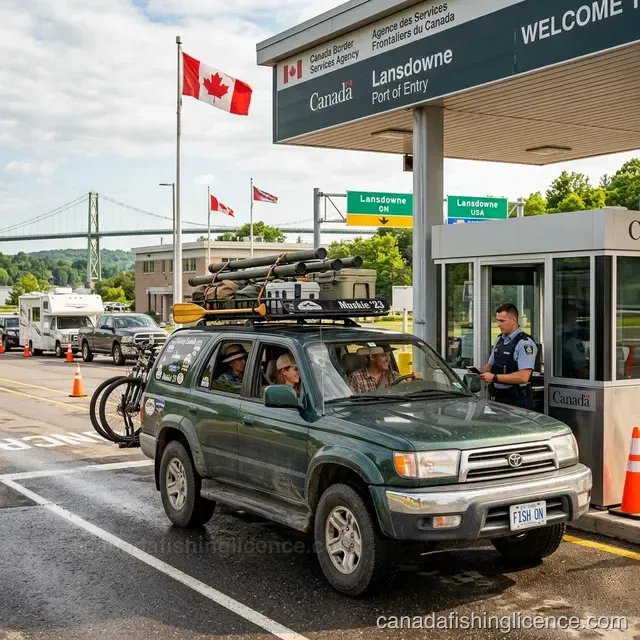
What Usually Crosses Easily
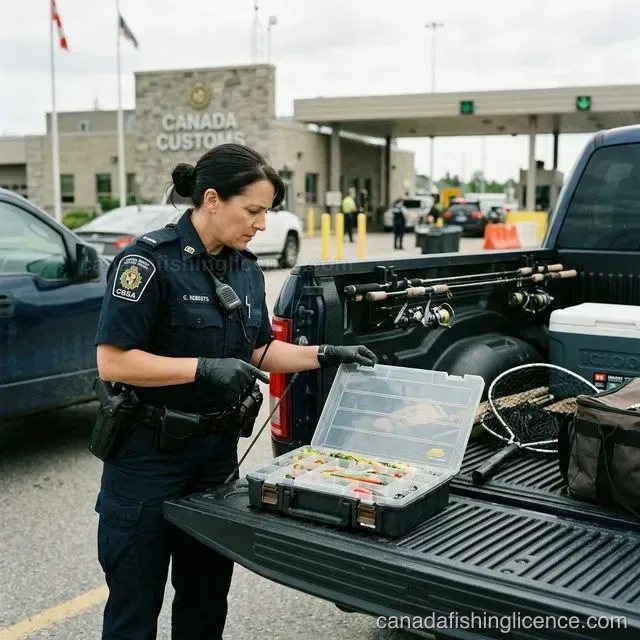
Rods, reels, tackle, and electronics: These fit squarely within normal personal sports equipment for most recreational travellers. Declare them when asked and keep them with the rest of your personal trip gear.
Boats, trailers, and coolers: These also fit the normal visitor trip when they are part of your travel gear and leave with you. What matters more is that the boat is clean, the paperwork is in order, and you are ready to describe where you are going.
High-value gear returning to the United States: If you are taking expensive fish finders, higher-priced rods, or other equipment with serial numbers, CBP Form 4457 is worth considering before you leave home. CBP says the form can be used to register personal effects taken abroad so you can show they were yours before the trip.
Bait, Worms, Soil, and Other Easy Mistakes
This is where many anglers get tripped up. CBSA requires travellers to declare food, plants, animals, and related products. That means you should not treat bait as an afterthought at the booth.
Earthworms are a good example of why assumptions go wrong. The CFIA says that, beginning October 1, 2020, a plant protection permit is required to import earthworms into Canada from the continental United States for commercial or personal purposes. If live worms or soil-connected bait are part of the trip plan, do not rely on old tackle-shop advice.
For practical trip planning, the simplest rule still holds: buy bait on the same side of the border where you plan to fish. It reduces paperwork, reduces confusion at inspection, and keeps your trip aligned with local bait and invasive-species rules.
Trailering a Boat Means Thinking About Invasive Species
If you are towing a boat, clean, drain, and dry it before you start driving. This matters at the border and after the border. Provinces, parks, and local inspection programs can all require invasive-species precautions, inspections, or decontamination steps.
Remove plants and visible mud, drain standing water, and do not show up with water still sloshing in livewells or other compartments. A clean boat is not just a courtesy. It is the normal starting point for a cross-border trip.
Wading gear deserves the same attention. Parks Canada states that felt-soled boots are not permitted in Banff National Park waters, and the same park rules also ban lead tackle under 50 grams and natural bait within 100 metres of park waters. If your trip includes a national park, repack that gear before you leave.
Crossing by Private Boat: Canada Side
CBSA’s current private-boater guidance is more specific than many anglers realise. If you enter Canadian waters and do not land, anchor, moor, make contact with another vessel, or embark or disembark people or goods, you may fall within the reporting exception for foreign national boaters.
The moment you come to port, anchor, moor, or make contact with another vessel, CBSA says you must report immediately. For many private boats, that means using a designated marine reporting site or a Telephone Reporting Centre site. CBSA also states that only the operator may leave the boat to place the call, and everyone else must remain onboard until entry is authorized.
This is the point where “we are just drifting around for a little while” stops being a useful legal test. If the boat trip might involve anchoring, tying up, landing, or exchanging anything with another vessel, plan to report.
Remote Water Crossings: RABC Changes for 2026
If your trip involves the Northwest Angle, Pigeon River through Lake of the Woods, or other remote crossings that historically used the Remote Area Border Crossing Program, this year matters. CBSA says applications are no longer being accepted, the RABC program is being replaced with telephone reporting effective December 1, 2026, and existing permits remain valid only until 11:59 pm on November 30, 2026.
After that date, travellers entering Canada through those covered remote areas must report to CBSA in person at a port of entry or a designated telephone reporting site. That is a real planning change for anglers who have relied on the old remote-permit model for years.
Crossing by Private Boat: United States Return
On the way back, U.S. reporting rules come into play immediately. CBP says operators of small pleasure vessels arriving in the United States from a foreign port or place must report their arrival to CBP immediately.
CBP ROAM is one of the accepted tools for doing that. CBP describes ROAM as a free mobile application that lets pleasure boaters report U.S. entry on a personal device, though some situations may still require in-person follow-up.
If you return by boat often, set up the reporting tool before the trip, not at the shoreline after a long day. The time to learn the app is not when everyone else is waiting to clear entry.
Bear Spray, Pepper Spray, and Firearms
Do not assume all self-defence products cross the border the same way. CBSA’s firearms and weapons memorandum states that sprays designed to be used against humans, including many products marketed as pepper spray, are prohibited weapons. The same memorandum explains that animal repellents such as bear or dog repellent are not considered prohibited weapons when the label clearly indicates that they are for use against animals only and the relevant pest-control rules are met.
In practical terms, label and intended use matter. If the trip does not genuinely call for animal deterrent spray, leaving it at home is often the simpler choice. If you do bring it, carry a properly labelled animal repellent product and declare it if asked.
Firearms need even more care. Canada has separate declaration rules for visiting firearm owners, and many handguns remain heavily restricted or prohibited. If the fishing trip does not require a firearm, simplicity is your friend.
Bringing Fish Back with the Rest of Your Gear
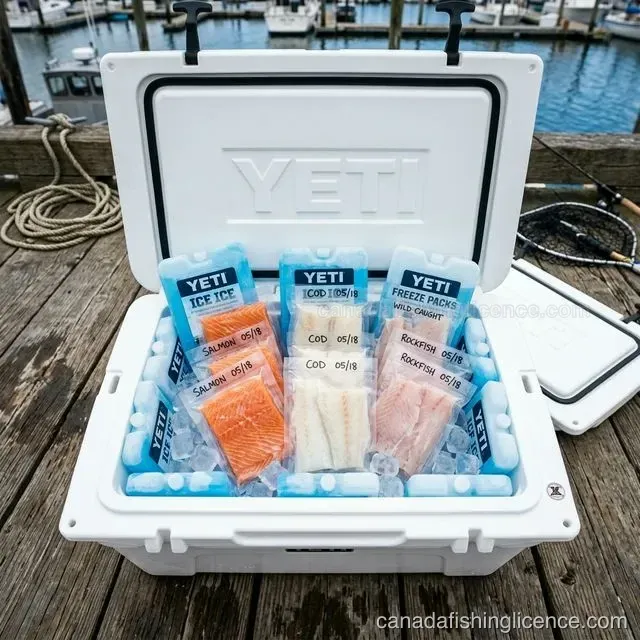
Once fish are in the cooler, they stop being just part of your gear and become an animal product that needs proper declaration. CBP requires travellers to declare animal products on return to the United States, and CBSA expects travellers entering Canada to declare food, plants, animals, and related products as well.
The cleanest approach is to keep the fish separate from the rest of the vehicle load, keep your licence with you, and pack the catch in a way that matches the province’s transport rules. That makes the return trip easier and keeps the legal side of the catch attached to the fish all the way home.
A Practical Border Checklist for Gear
Before you leave: separate regular gear from bait, food, and animal products; clean and drain the boat; save licence documents; decide whether you want CBP Form 4457 for expensive gear.
On the Canada side: declare goods honestly, especially food, plant, animal, and restricted items; do not improvise with questionable bait or sprays.
On the water: know whether the trip will involve anchoring, landing, or boat-to-boat contact, because that changes reporting requirements.
On the U.S. return: declare fish and animal products; if returning by private boat, report arrival to CBP immediately and use ROAM or the designated reporting method for your location.