Tidal Fishing Licence Canada 2026-27: B.C. Saltwater, DFO & Fees
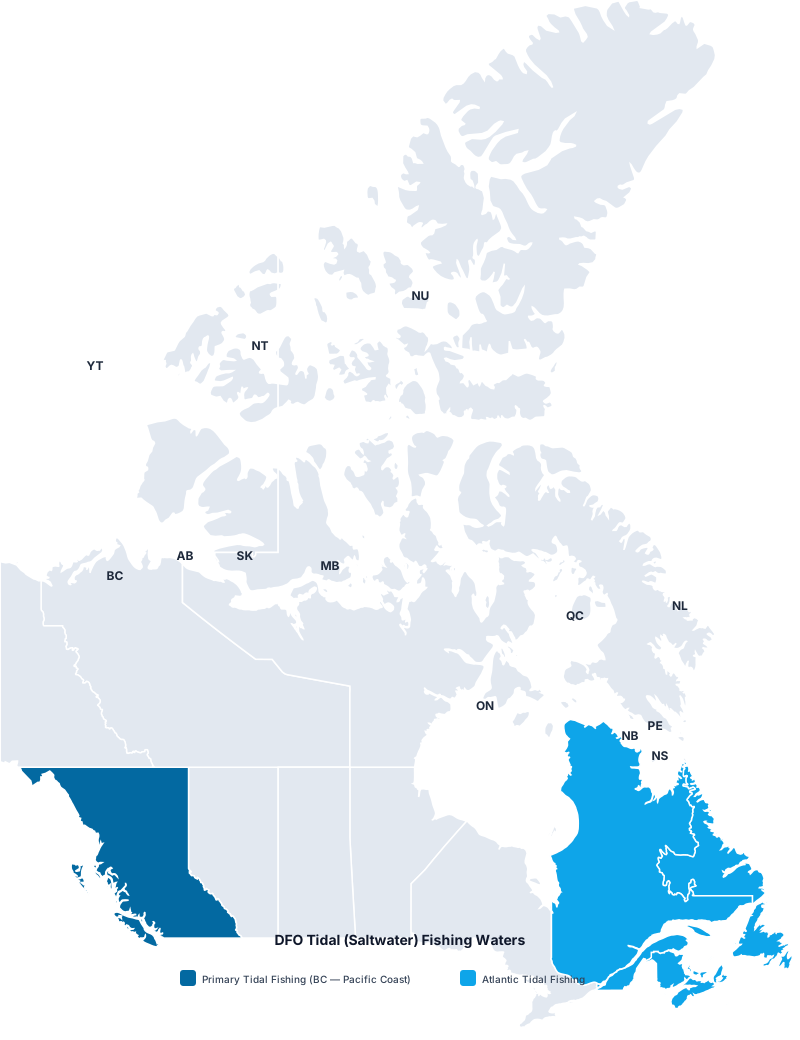
Tidal and saltwater licence rules are not the same across Canada. British Columbia uses DFO's B.C. Tidal Waters Sport Fishing Licence, while Atlantic saltwater rules usually work differently.
Tidal Licence Concept Checklist
Before treating a saltwater trip like a freshwater trip, check these four details:
Check the coast and province. B.C. tidal saltwater follows the DFO tidal path; Atlantic saltwater usually follows a different rule path.
Separate freshwater from tidal water. A provincial freshwater licence does not automatically answer tidal or coastal questions.
Check species rules. Salmon, shellfish, halibut, groundfish, and catch-record rules can change the next step.
Check the local guide before buying. The B.C. tidal guide has saltwater fees and DFO steps.
Canada does not have one saltwater licence rule for every coast. In British Columbia, recreational fishing for finfish or shellfish in tidal salt waters uses DFO's B.C. Tidal Waters Sport Fishing Licence, separate from provincial freshwater licences. In Atlantic provinces, a separate DFO tidal licence generally is not the normal requirement for most recreational saltwater fishing, but seasons, species rules, catch limits, and special permits still matter.
- B.C. tidal saltwater uses DFO, not the provincial WILD freshwater licence
- Atlantic saltwater trips usually follow a different rule path
- B.C. annual adult tidal: $25.86 Canadian resident | $124.41 DFO non-resident
- B.C. Salmon Conservation Stamp: $7.39 extra to retain salmon
- Check species, season, and catch-record rules before relying on a licence alone
Official Tidal Licence Links
For B.C. saltwater, start with DFO Pacific. For Atlantic saltwater, check the DFO regional rules for the species and area before you assume the B.C. licence model applies.
B.C. Example: DFO Tidal Waters Pricing
These are B.C. tidal waters licence prices, not a Canada-wide saltwater price table. For B.C.-specific saltwater fees, salmon stamp decisions, juvenile tidal licences, and DFO buying steps, check the BC tidal fishing licence guide.
| Licence Type | Resident (16-64) | Senior (65+) | Non-Resident |
|---|---|---|---|
| Annual | $25.86 CAD | $13.54 CAD | $124.41 CAD |
| 5-Day | $19.70 CAD | — | $38.18 CAD |
| 3-Day | $13.54 CAD | — | $23.40 CAD |
| 1-Day | $6.46 CAD | — | $8.62 CAD |
| Salmon Conservation Stamp | $7.39 CAD | $7.39 CAD | $7.39 CAD |
All prices in CAD. Salmon Conservation Stamp ($7.39) required to retain Pacific salmon.
Short trips: If you are only fishing for a weekend, compare the 3-day or 5-day licence before choosing the annual product.
A DFO annual tidal licence is not valid for 365 days from the date of purchase. Annual tidal licences expire on March 31, no matter what month you bought the licence. Check the expiry date before booking a spring trip.
DFO requires the tidal licence to be in your possession while fishing or transporting catch. Record retained Chinook, halibut, and specified lingcod immediately where the current DFO rule requires it. Adult licence holders also need to complete the assigned iREC report by its deadline, even when no fishing or retention occurred.
If the licence is lost, DFO says you can print a free replacement through the NRLS portal or ask an Independent Access Provider to reprint it. Keep the replacement and any transferred catch records with you before continuing the trip.
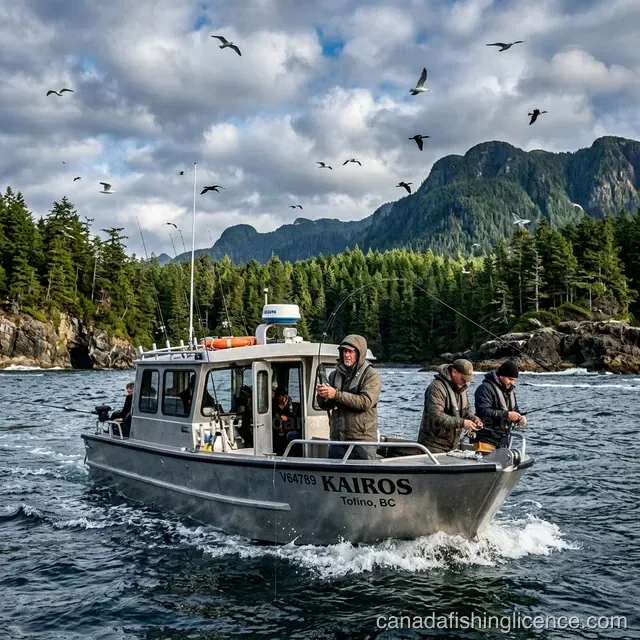
B.C. Purchase Path, In Brief
For B.C. tidal water, DFO's NRLS portal is the normal online starting point for many anglers. Before buying, check the B.C.-specific guide for the licence year, juvenile licence, salmon stamp, catch-record rules, shellfish context, and non-Canadian halibut exception.
Tidal vs Provincial: Key Differences
DFO Tidal Licence
Saltwater / Tidal waters
- Issued by DFO for B.C. tidal waters
- Not the same licence rule across every coastal province
- Separate from the provincial B.C. freshwater licence
- Purchased through NRLS portal
- Salmon stamp available as add-on
Provincial Licence
Freshwater fishing
- Issued by each province
- Only valid within that province
- Separate licence per province
- Purchased through provincial portal
- Species restrictions vary by zone
In B.C. tidal saltwater near places such as Pacific Rim National Park Reserve, the DFO tidal licence path can still apply. Park rules can add their own restrictions, so check the park page before you fish.
Atlantic Provinces: No B.C.-Style General Tidal Licence
Unlike British Columbia, ordinary recreational saltwater fishing in Atlantic provinces (Nova Scotia, New Brunswick, PEI, Newfoundland & Labrador) generally does not use the same separate DFO tidal licence model.
In Atlantic provinces, DFO regulates tidal fisheries through seasons, catch limits, and species restrictions rather than the B.C. tidal licence model for ordinary recreational saltwater fishing. Provincial freshwater licences cover inland waters. Specific permits may apply for Atlantic salmon and certain groundfish species.
Always check DFO Atlantic region regulations for your specific area, as rules differ by province and species. Some species (such as Atlantic bluefin tuna) require specific licences regardless of province.
Frequently Asked Questions
What is a tidal waters fishing licence?
In British Columbia, it is the DFO B.C. Tidal Waters Sport Fishing Licence for recreational fishing in tidal salt waters, including finfish and shellfish. Other coastal provinces usually follow a different licence path for most ordinary saltwater fishing.
Do I need both a tidal and provincial licence?
Only if the trip includes both systems. In B.C., tidal saltwater uses the DFO tidal licence, while freshwater uses the provincial WILD path. In other provinces, check the local freshwater and coastal species rules before assuming the B.C. model applies.
Where do I buy a B.C. tidal licence?
Most anglers buy through DFO's National Recreational Licensing System (NRLS). Some non-Canadian halibut trips must use an Independent Access Provider in Canada.
How much does a non-resident B.C. tidal licence cost?
A DFO non-resident annual B.C. tidal waters licence costs $124.41 for the 2026/27 season before GST. Short-term options are available: 1-day ($8.62), 3-day ($23.40), and 5-day ($38.18). The Salmon Conservation Stamp is an additional $7.39 to retain Pacific salmon.
Do I need a Salmon Conservation Stamp?
Only if you want to keep (retain) Pacific salmon species in BC. Without the stamp ($7.39), you can still fish for salmon but must release them. The stamp is purchased alongside your tidal licence through NRLS.
Is a B.C.-style tidal licence needed for Atlantic provinces?
Generally no for most ordinary recreational saltwater fishing. Atlantic provinces usually do not use the same separate DFO tidal licence model as B.C., but DFO seasons, catch limits, species restrictions, and special permits can still apply.