| Common U.S. visitor question | Short answer | Helpful link |
|---|---|---|
| Do Americans need a Canadian fishing license? | Usually yes. Buy the non-resident or non-Canadian product for the exact place you plan to fish. | Non-resident licences |
| Can I buy before crossing the border? | Often yes, but the issuing system changes by province, park, tidal water, and seller setup. | Official portal links |
| My trip is in Ontario. Where should I start? | Check the Ontario non-resident path before choosing a Sport or Conservation licence. | Ontario visitor guide |
| My trip is in B.C. What is different? | B.C. freshwater and tidal water use separate systems, and a mixed trip may need both. | B.C. visitor guide |
| What about saltwater, salmon, or national parks? | Those trips can use a federal tidal licence, salmon stamp, or Parks Canada permit instead of the normal provincial path. | Federal vs provincial |
U.S. Visitor Trips Start With Border, Province, Water and Return Proof
Yes, Americans usually need a Canadian fishing licence or permit for the exact province, territory, park, or tidal fishery where they will fish. A U.S. state fishing license does not carry into Canada, and Canada does not sell one national freshwater fishing licence. Before you leave, check the CBSA visitor border information for current entry documents and declarations.
The simple order is: carry a valid U.S. passport or passport card for a land or sea trip, choose the province or water type, buy the visitor licence before you leave home when online buying is available, save proof where it works without cell service, and declare fish, bait, food, or animal products on the return trip.
How Much The Licence Costs Depends On The Province
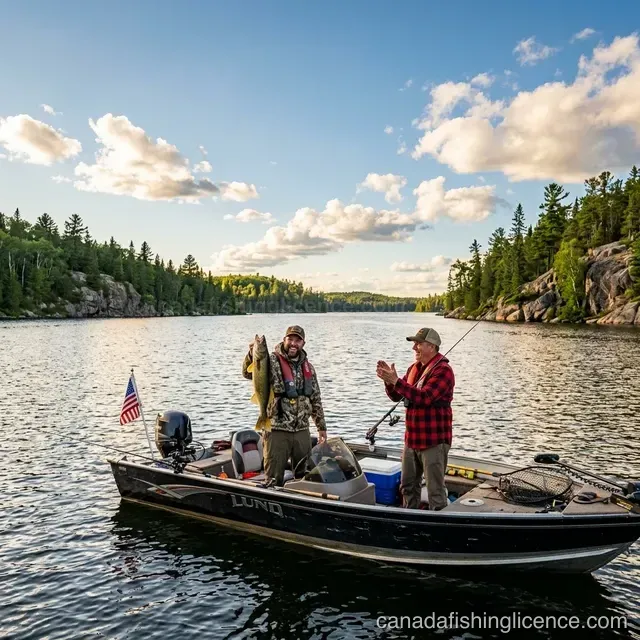
There is no single Canadian fishing licence price for Americans. A short Ontario freshwater stop, a B.C. tidal trip, a Quebec salmon plan, and a Banff park day all use different price logic.
If the trip is still flexible, compare the cost by province. If the province is already set, open that province's page and compare the short-term visitor products before buying an annual licence.
For a road trip, budget one stop at a time. A licence that works in Ontario does not carry into Manitoba, Quebec, B.C., or a national park.
Start with the Travel Document, Not the Tackle
The CBSA says U.S. citizens should travel with a valid passport when entering Canada. It also notes that U.S. citizens may present documents showing full name, date of birth, and citizenship, with a separate photo ID if needed. For a fishing trip, the safest practical choice is still a valid passport.
If you travel by land or sea only, the U.S. Department of State says the passport card is valid for travel between the United States and Canada. It is not valid for international air travel, so use a passport book if the trip includes a flight.
If you already use NEXUS, it can speed up repeat crossings, but it does not replace the need to understand what goods, gear, and fishery documents you may be asked to show on either side of the border.
Canada Does Not Have One National Freshwater Licence
The main licence rule for American visitors is straightforward: Canada does not issue one national freshwater sport-fishing licence. You buy the licence for the province or territory where you plan to fish. If the trip crosses into tidal waters in British Columbia, national park waters, or special fisheries, the issuing system can change.
That is why “fishing in Canada” is not one purchase decision. Ontario, Quebec, Saskatchewan, Alberta, Manitoba, and British Columbia each run their own systems. Some need a prerequisite ID number before you can check out. Some issue a one-day licence without the extra card. Some special waters use a separate federal or park permit.
The Province and Fishery Rules That Matter First
| Where you plan to fish | What Americans usually need | Current fee example | Official link |
|---|---|---|---|
| Ontario freshwater | Non-Canadian resident fishing licence; Outdoors Card required except for 1-day licences | 1-day sport: $24.86; 8-day sport: $54.38; annual sport: $83.19; Outdoors Card: $8.57 | Ontario Fishing Regulations Summary |
| B.C. freshwater | Freshwater licence in WILD with a Fish and Wildlife ID (FWID) | Non-resident alien 1-day: $22.86; 8-day: $57.14; annual: $91.44 | B.C. freshwater licence page |
| B.C. tidal waters | Separate DFO B.C. Tidal Waters Sport Fishing Licence; salmon conservation stamp if retaining salmon | 1-day non-resident: $8.62; 3-day: $23.40; 5-day: $38.18; annual: $124.41; salmon stamp: $7.39 | DFO NRLS portal |
| Saskatchewan | Official angling licence page; anglers age 16-64 also need a Fisheries Habitat Certificate | Non-resident annual: $115; 3-day: $57; 1-day: $28; habitat certificate: $21 annual / $5.25 short term | Saskatchewan angling licence page |
| Quebec | Non-resident licence bought through Quebec’s sport fishing system | 1-day: $22.36; 7-day: $57.67; annual: $95.68 | Quebec fishing licence page |
| Prince Edward Island | 2026 angling licence through the provincial online service or a vendor | $10/year + HST; Wildlife Conservation Fund varies by age and product | PEI Angling Resources |
These are current fee examples for the 2026 or 2026-27 licence year where that licence year applies. Quebec prices include taxes and the Fondation de la Faune contribution. Fees can change before a later trip, so check the official page before paying.
Prince Edward Island lists a $10 annual angling licence line plus HST, but the Wildlife Conservation Fund amount changes with age and product. Check the current Angling Summary before treating the licence line as the full visitor cost.
Alberta is another common visitor province, especially for Bow River trips. Alberta’s online system says anglers need a Wildlife Identification Number (WiN) before buying a fishing licence. Use that requirement, not a guess, as the start of your Alberta planning.
British Columbia Needs Special Attention
British Columbia is the province that causes the most confusion for U.S. visitors because it does not run everything through one recreational licence. The provincial freshwater system and the federal tidal system are separate. If you are planning both river fishing and saltwater fishing on the same trip, you may need both.
For the 2026-27 licence year, B.C. freshwater licences are handled in WILD and anglers need a FWID. Tidal waters use the separate B.C. Tidal Waters Sport Fishing Licence from DFO, and a salmon conservation stamp is required if salmon are retained.
DFO also adds a special note for non-residents fishing for halibut in Areas 23, 121, and 123: those anglers must buy their tidal licence from an Independent Access Provider in Canada rather than online. That is exactly the kind of detail worth sorting out before you drive to the launch.
Save the Licence Properly Once You Buy It
Do not treat the checkout email as your licence. Save the actual licence, licence summary, or other official fishing document that the province or DFO tells you to carry.
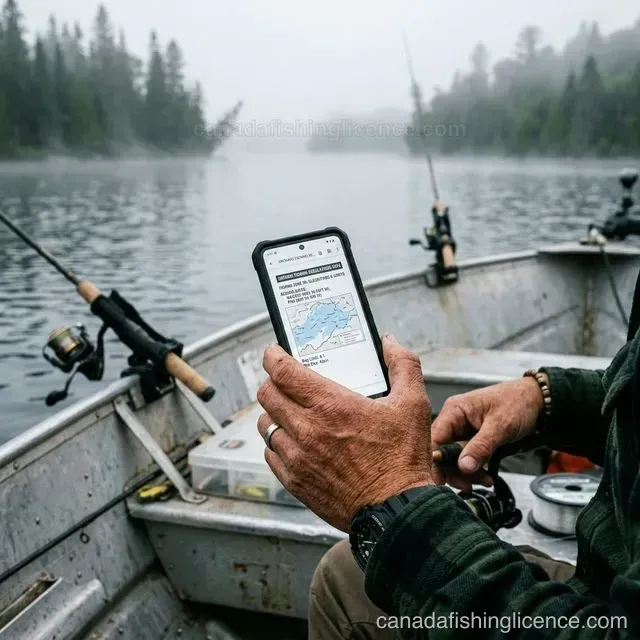
Ontario allows anglers to carry a digital licence summary. B.C. freshwater licences can be carried electronically, but the province says a paper copy is still required when a conservation surcharge retention record must be filled out. DFO allows electronic tidal licences and catch records, but if you cannot record a catch electronically because there is no mobile internet, be ready to record it on paper.
The practical takeaway is simple: save the PDF, take a screenshot only as backup, and print when the fishery requires a catch record. That one habit prevents a lot of avoidable problems on the water.
Border Basics for Gear, Bait, and Boats
The CBSA says visitors may bring personal goods such as camping and sports equipment, cameras, and their vehicle or boat, as long as those goods are declared and taken back out of Canada when the trip ends. That is the basic rule that makes normal fishing gear and trailered boats workable for most visiting anglers.
At the same time, CBSA and CBP both treat food, plant, and animal products seriously. Canada requires travellers to declare those items on entry. The United States requires travellers returning home to declare animal and plant products as well. That is why bait, fish, and food deserve more thought than your rod case does.
If you are trailering a boat, clean, drain, and dry it before you travel. Some provinces and parks also enforce inspection or decontamination rules. If you are wading in national park waters, remember that some parks, including Banff, do not allow felt-soled boots.
If You Have an Impaired Driving Conviction or Other Criminal History
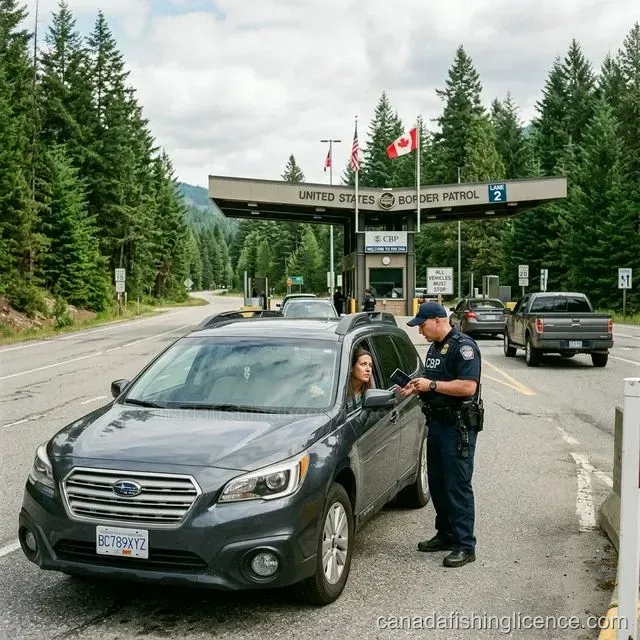
This is worth checking early if it applies to you. Canada’s immigration guidance says that if you have been convicted of driving while impaired by alcohol or drugs, you may be inadmissible to Canada for serious criminality. The same general issue can arise with other criminal history as well.
The official Canada.ca guidance explains that some travellers may need to resolve inadmissibility through rehabilitation or a temporary resident permit. It also notes that pleasure trips are normally not treated as a strong justification for a temporary resident permit. If this might apply to you, check it before you book lodging or launch plans.
National Parks and Other Special Waters
Do not assume your provincial licence covers every water you see on the trip. National park waters use a separate Parks Canada permit system. Some federal and special fisheries also have their own rules layered on top of the base licence.
This matters most on mixed trips. If you plan to fish Banff, Jasper, or another national park on the same itinerary as a provincial water, treat those as two separate planning steps. The same approach works for B.C. tidal trips and salmon retention rules: decide the water first, then match the permit to the water.
If the trip is mostly a park trip, check the boundary first, then use the Parks Canada permit guide for daily or annual permit cost. For Banff, the current park page also requires the permit in your immediate possession and bans felt-soled boots, natural bait, chemical attractants, and lead tackle under 50 grams in or within 100 metres of park waters. If the trip is mostly a price question, start with the cost-by-province comparison and then move to the visitor or park page that matches the water.
Coming Back to the United States
On the return trip, do not focus only on your fish. Focus on your declaration. CBP says travellers entering the United States must declare meats, plants, soil, animals, and animal products. If you are carrying fish, bait, or any other animal product, declare it and let CBP decide what needs inspection.
Keep your Canadian fishing licence with you on the return trip as proof of where and how the fish were lawfully taken. Stay within the province’s possession rules, keep the catch packaged so it can be understood during inspection, and do not assume that one province’s transport rules are the same as another’s.
If you are returning by private boat rather than by land, CBP says the operator must report U.S. arrival immediately, and CBP ROAM is one of the accepted tools for doing that.